 MEDIVEERSETHE PRACTICAL HUB
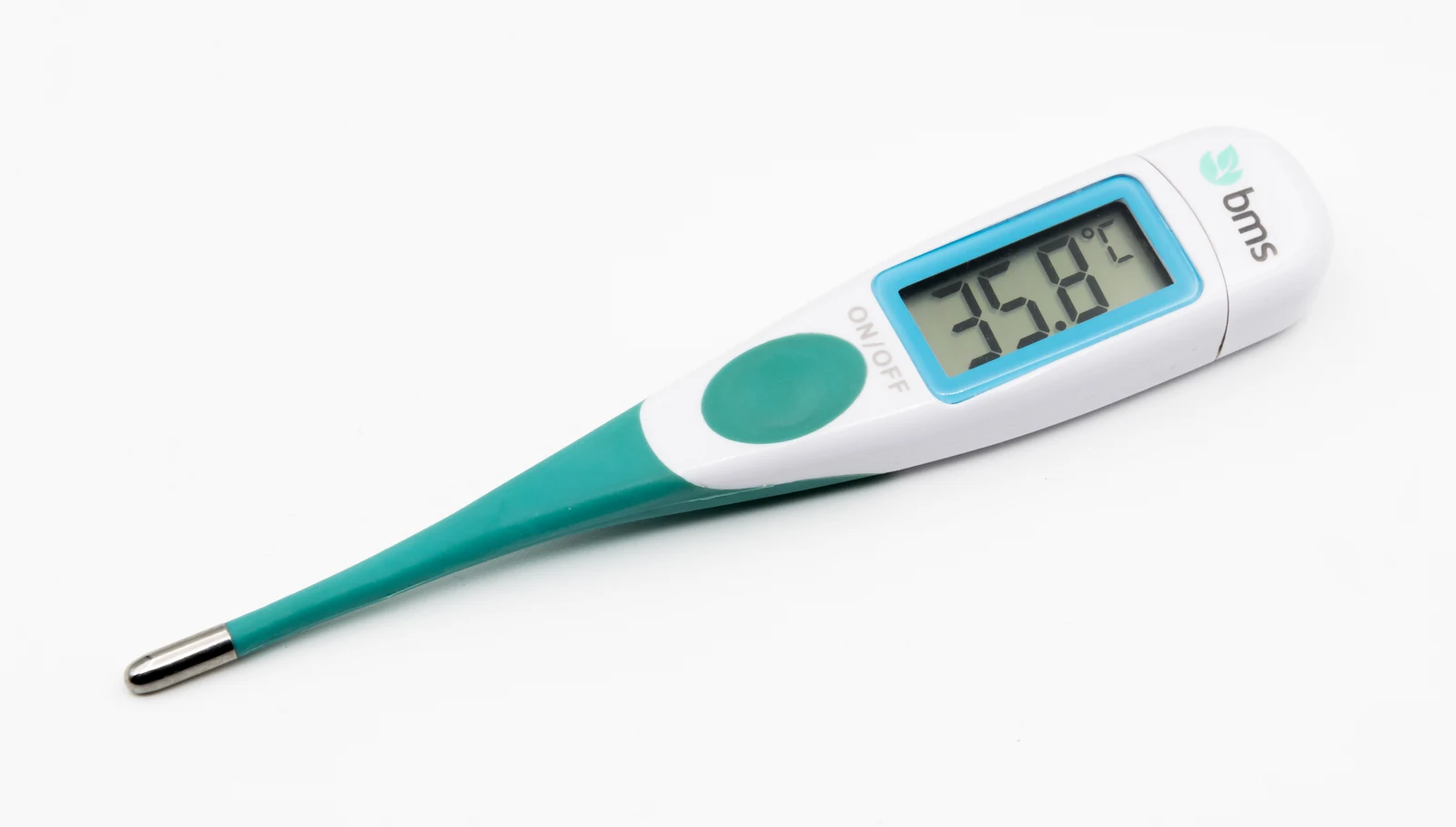
Sensor tip: located on the reference instrument. Compare its shape and position with the apparatus used in your practical.
Zoom in, then drag to inspect. Keyboard: + / − to zoom, arrows to pan, 0 to reset. Tap the numbered markers to explore parts.
Clinical thermometer — reference view
Image: Jacek Halicki · Source / original · CC BY-SA 4.0Resized and converted to WebP; original colours retained.
Clinical thermometer
Digital clinical thermometer
What is its use?
Measures body temperature using a device and site appropriate to the examination.
Tap a number to locate its part. Zoom, drag or use full screen to inspect the reference. Models and graduations can differ; check the actual apparatus used in your laboratory.
How to recognise it.
- Temperature-sensing probe
- Numerical display in a digital model
- A switch or control starts the measurement
Contact, tympanic infrared and non-contact infrared thermometers have different measurement principles and site requirements.
Point them out.
Choose a part to bring its numbered marker into view.
The science behind the reading.
Digital contact thermometers convert a temperature-dependent sensor property into a calibrated temperature estimate.
Think first. Then reveal.
Explain your answer aloud before opening it.
01Why does the measurement site matter?+
Different sites can give systematically different values; interpret using the device and site specified.
02What units are used?+
Degrees Celsius or Fahrenheit, according to the instrument setting.
03Does every thermometer measure core temperature directly?+
No. Many clinical devices estimate temperature at a peripheral site.
04Why allow the device to complete its measurement?+
The device needs its specified sensing and calculation interval to produce a valid result.
Read the references.
Teaching and clinical references are listed here. Image attribution and licence appear below the viewer.