 MEDIVEERSETHE PRACTICAL HUB
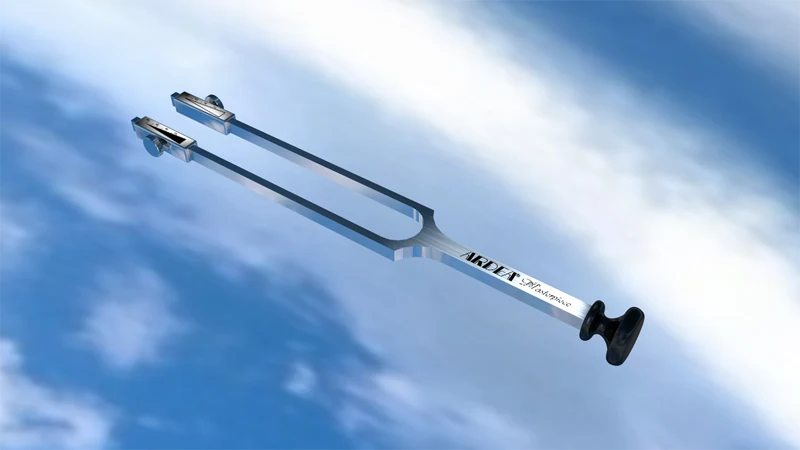
Prongs: located on the reference instrument. Compare its shape and position with the apparatus used in your practical.
Zoom in, then drag to inspect. Keyboard: + / − to zoom, arrows to pan, 0 to reset. Tap the numbered markers to explore parts.
Tuning fork — reference view
Image: Takahe · Source / original · CC BY-SA 4.0Resized and converted to WebP; original colours retained.
Tuning fork
Vibration sense · Rinne and Weber tests
What is its use?
Provides a vibration for bedside hearing or vibration-sense examination, using the frequency appropriate to the test.
Tap a number to locate its part. Zoom, drag or use full screen to inspect the reference. Models and graduations can differ; check the actual apparatus used in your laboratory.
How to recognise it.
- Two metal prongs joined at a common base
- Stem for holding the instrument
- Frequency is usually marked on the fork
A 512 Hz fork is commonly used for bedside hearing tests; a 128 Hz fork is commonly used for vibration sense.
Point them out.
Choose a part to bring its numbered marker into view.
The science behind the reading.
A vibrating fork generates a relatively defined frequency transmitted through air or bone.
Think first. Then reveal.
Explain your answer aloud before opening it.
01What does Rinne compare?+
Air conduction and bone conduction at the same ear.
02What is the usual Rinne finding in a normal ear?+
Air conduction is perceived longer or louder than bone conduction under the test conditions.
03What does Weber assess?+
Lateralisation of sound from a fork placed at the midline.
04Which fork is commonly used for vibration sense?+
A 128 Hz fork, with comparison across appropriate bony sites.
Read the references.
Teaching and clinical references are listed here. Image attribution and licence appear below the viewer.