 MEDIVEERSETHE PRACTICAL HUB
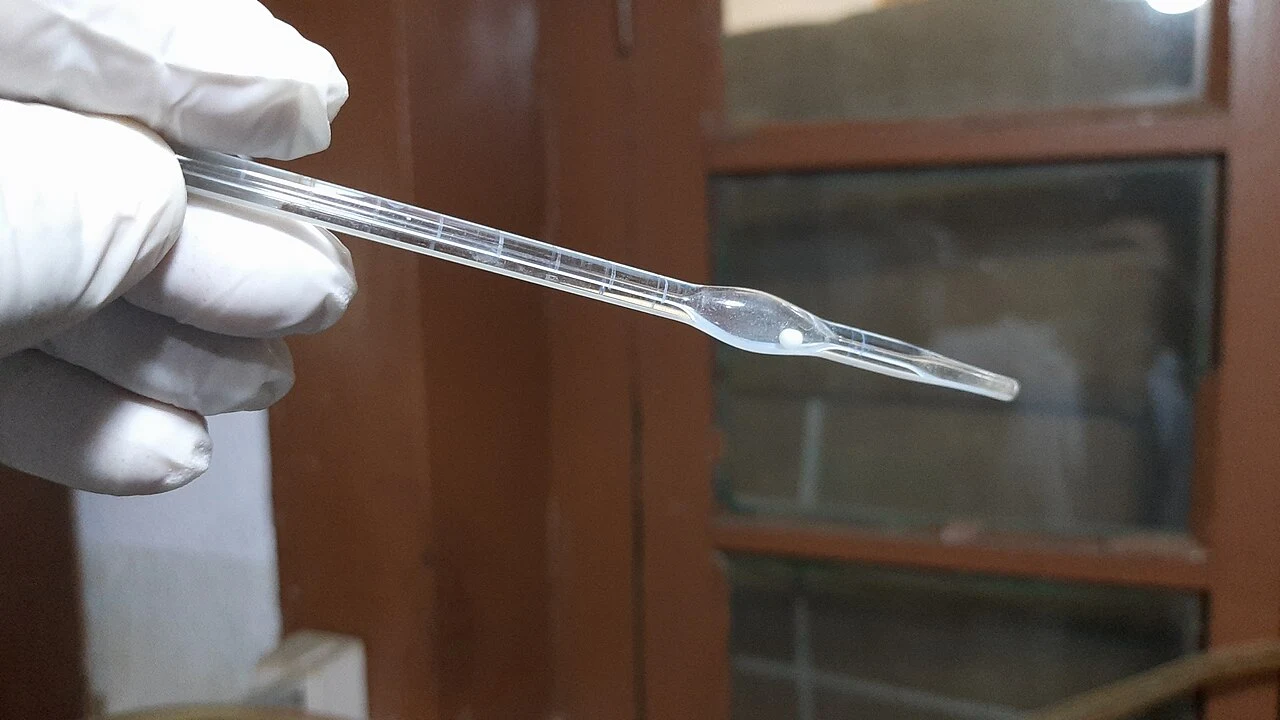
Graduated stem: located on the reference instrument. Compare its shape and position with the apparatus used in your practical.
Zoom in, then drag to inspect. Keyboard: + / − to zoom, arrows to pan, 0 to reset. Tap the numbered markers to explore parts.
WBC diluting pipette — reference view
Image: Ajay Kumar Chaurasiya · Source / original · CC BY-SA 4.0Resized and converted to WebP; original colours retained.
WBC diluting pipette
Thoma white-cell pipette
What is its use?
Prepares a measured cell suspension for traditional manual haemocytometry.
Tap a number to locate its part. Zoom, drag or use full screen to inspect the reference. Models and graduations can differ; check the actual apparatus used in your laboratory.
How to recognise it.
- Graduated narrow glass stem
- Mixing bulb conventionally contains a white bead
- Classic markings include 0.5, 1 and 11
The RBC pipette has a different bulb capacity and upper marking. Confirm graduations rather than identifying by bead colour alone.
Point them out.
Choose a part to bring its numbered marker into view.
The science behind the reading.
A calibrated stem and mixing bulb provide a known dilution. In the conventional teaching arrangement, blood to 0.5 and diluent to the upper mark give 1:20.
Think first. Then reveal.
Explain your answer aloud before opening it.
01How do you identify it?+
Inspect the upper graduation and bulb capacity; bead colour is a conventional aid, not the only criterion.
02Why is there a bead in the bulb?+
It assists mixing of the cell suspension.
03What is the conventional dilution described here?+
1:20; other fill volumes or devices produce other dilutions, so calculate from the actual method.
04Is mouth pipetting acceptable?+
No. Use an approved mechanical pipetting aid and institutional laboratory procedures.
Read the references.
Teaching and clinical references are listed here. Image attribution and licence appear below the viewer.