 MEDIVEERSETHE PRACTICAL HUB
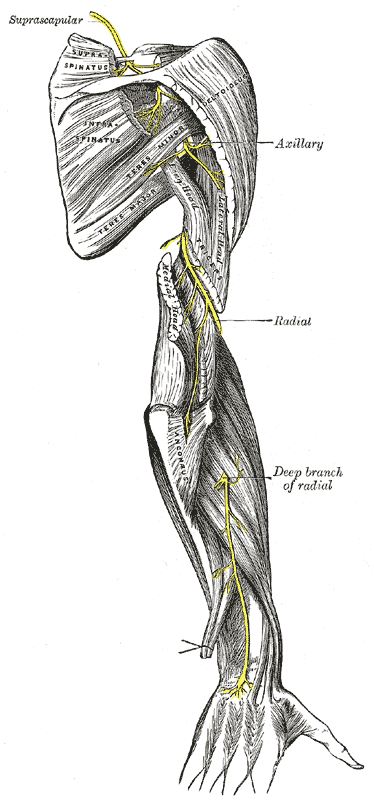
Radial nerve in the posterior arm; follow its distal branching on the original plate.
Zoom in, then drag to inspect. Keyboard: + / − to zoom, arrows to pan, 0 to reset. Tap the numbered markers to explore parts.
upper posterior nerves: original labelled anatomical illustration.
Image: Henry Vandyke Carter / Gray’s Anatomy (1918) · Source / original · Public domainNumbered markers and focused views are Mediveerse learning overlays; the original reference is linked above.
Radial nerve
Understand what you see.
Main motor nerve of the extensor compartments of arm and forearm.
Zoom into the original labels. Practise pointing out each structure, then explain it aloud. Diagrams are teaching references; specimen appearance and slide staining vary.
How to recognise it.
- Posterior cord branch
- Travels in humeral radial groove
- Divides into superficial and deep branches
Point them out.
Tap a number to open its reference, zoom in and locate the structure. Numbers stay the same across views. This key follows landmarks visible in the reference images.
Think first. Then reveal.
Say your answer aloud before opening the suggested response.
01How do you identify radial nerve?+
Posterior cord branch. Travels in humeral radial groove. Divides into superficial and deep branches.
02What is a typical motor effect of a major radial lesion?+
Weak wrist extension or wrist drop; severity and triceps involvement depend on lesion level.
03Is the posterior interosseous nerve a cutaneous nerve?+
It is predominantly motor; the superficial radial branch supplies cutaneous sensation.
04What is its main functional or developmental significance?+
Main motor nerve of the extensor compartments of arm and forearm. Key structures to recognise: Radial groove; Deep branch/posterior interosseous nerve; Superficial sensory branch.
Read the references.
Credited anatomical plates, microscopy and university teaching references. Individual image credits appear below the viewer. Historical plates can use older terminology; use the lesson text for current names.