Identify the reference
Electronic acquisition unit with controls. Display or paper output for waveforms. Lead connections receive surface-electrode signals
 MEDIVEERSETHE PRACTICAL HUB
LOOK CLOSELY / UNDERSTAND CLEARLY
Recognise an ECG recorder and outline identity, recording quality and systematic interpretation.
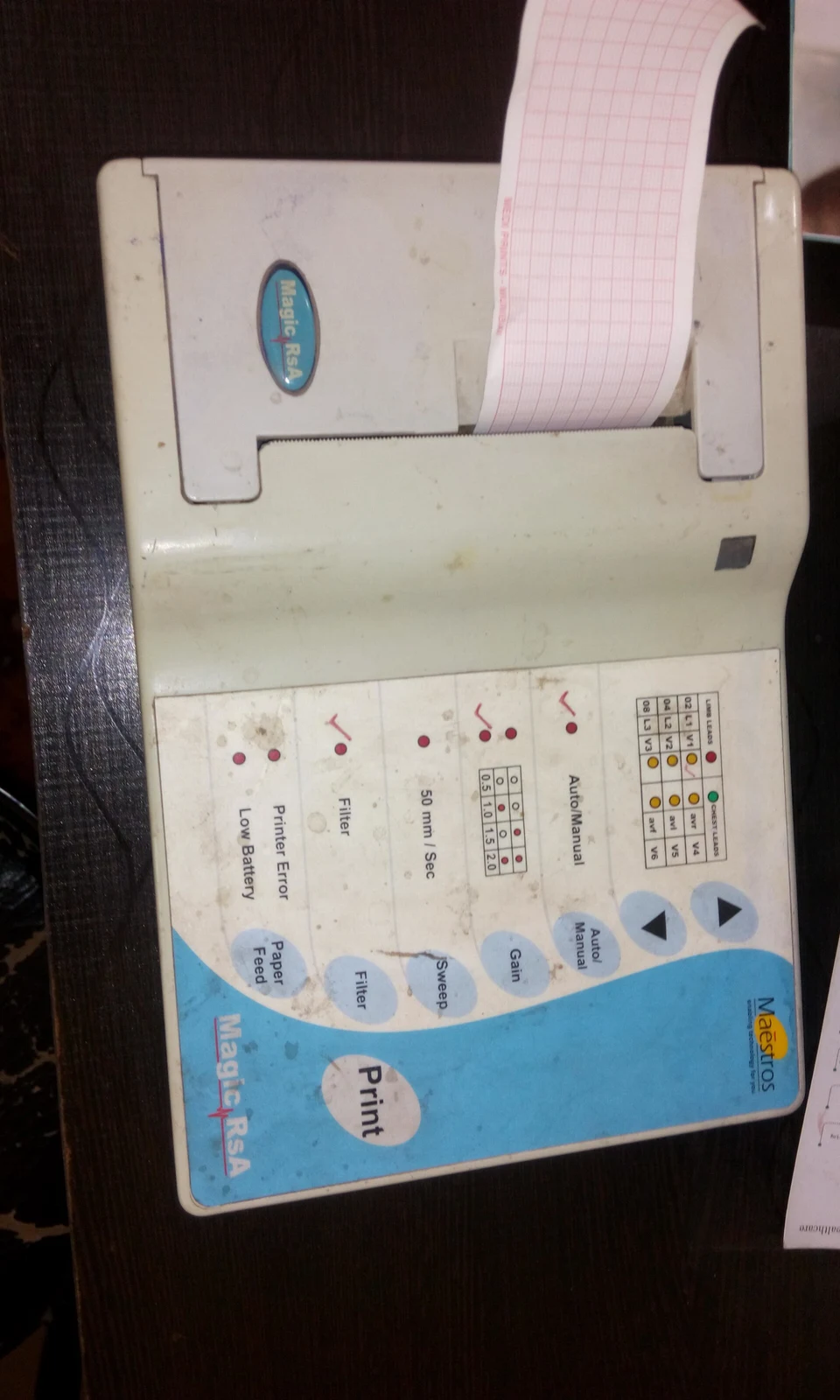
Paper trace: located on the reference instrument. Compare its shape and position with the apparatus used in your practical.
Zoom in, then drag to inspect. Keyboard: + / − to zoom, arrows to pan, 0 to reset. Tap the numbered markers to explore parts.
Electrocardiograph — reference view
Image: Zeeshan2907 · Source / original · CC BY-SA 4.0Resized and converted to WebP; original colours retained.
Electrodes detect voltage differences; amplification and recording produce leads that view the cardiac electrical field from different directions.
Electronic acquisition unit with controls. Display or paper output for waveforms. Lead connections receive surface-electrode signals
Electrodes detect voltage differences; amplification and recording produce leads that view the cardiac electrical field from different directions.
Check patient identity, calibration and recording quality before interpreting a rhythm or tracing. The photograph shows the recorder, not a teaching ECG diagnosis.
Try answering aloud, then open the suggested answer. Examiner questions vary.
Atrial depolarisation.
Ventricular depolarisation; atrial repolarisation is usually obscured within it.
Ten: four limb and six precordial electrodes. A lead is a view, not simply an electrode.
Ventricular repolarisation.