 MEDIVEERSETHE PRACTICAL HUB
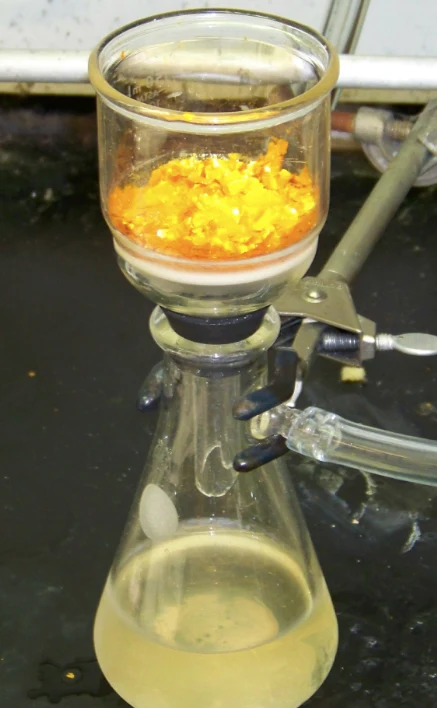
Holds the filter medium and material being separated in this vacuum-filtration assembly.
Zoom in, then drag to inspect. Keyboard: + / − to zoom, arrows to pan, 0 to reset. Tap the numbered markers to explore parts.
Vacuum filtration apparatus — reference view
Image: Smokefoot · Source / original · Public domainResized and converted to WebP; original colours retained.
Vacuum filtration apparatus
Filter funnel · suction flask · vacuum filtration
What is its use?
Separates suspended solids from a liquid using a suitable filter medium and reduced pressure.
Tap a number to locate its part. Zoom, drag or use full screen to inspect the reference. Models and graduations can differ; check the actual apparatus used in your laboratory.
How to recognise it.
- Filter funnel mounted above a receiving flask
- Side-arm flask connected to a vacuum line
- Support clamp holds the upper assembly
Gravity filtration relies mainly on gravity; vacuum filtration adds a pressure difference. The reference shows a mounted vacuum-filtration assembly, not a simple open transfer funnel.
Point them out.
Choose a part to bring its numbered marker into view.
The science behind the reading.
A pressure difference across the filter helps draw liquid into the receiving flask while larger particles are retained.
Think first. Then reveal.
Explain your answer aloud before opening it.
01What is the filtrate?+
The liquid collected after it passes through the filter medium.
02What is the residue?+
The solid material retained on the filter.
03Does filtration remove every dissolved substance?+
No. Ordinary filtration separates suspended particles, not all dissolved molecules.
04Why use a suitable receiving flask?+
Vacuum work requires compatible, undamaged apparatus rated for the pressure difference and used according to the laboratory protocol.
Read the references.
Teaching and clinical references are listed here. Image attribution and licence appear below the viewer.