 MEDIVEERSETHE PRACTICAL HUB
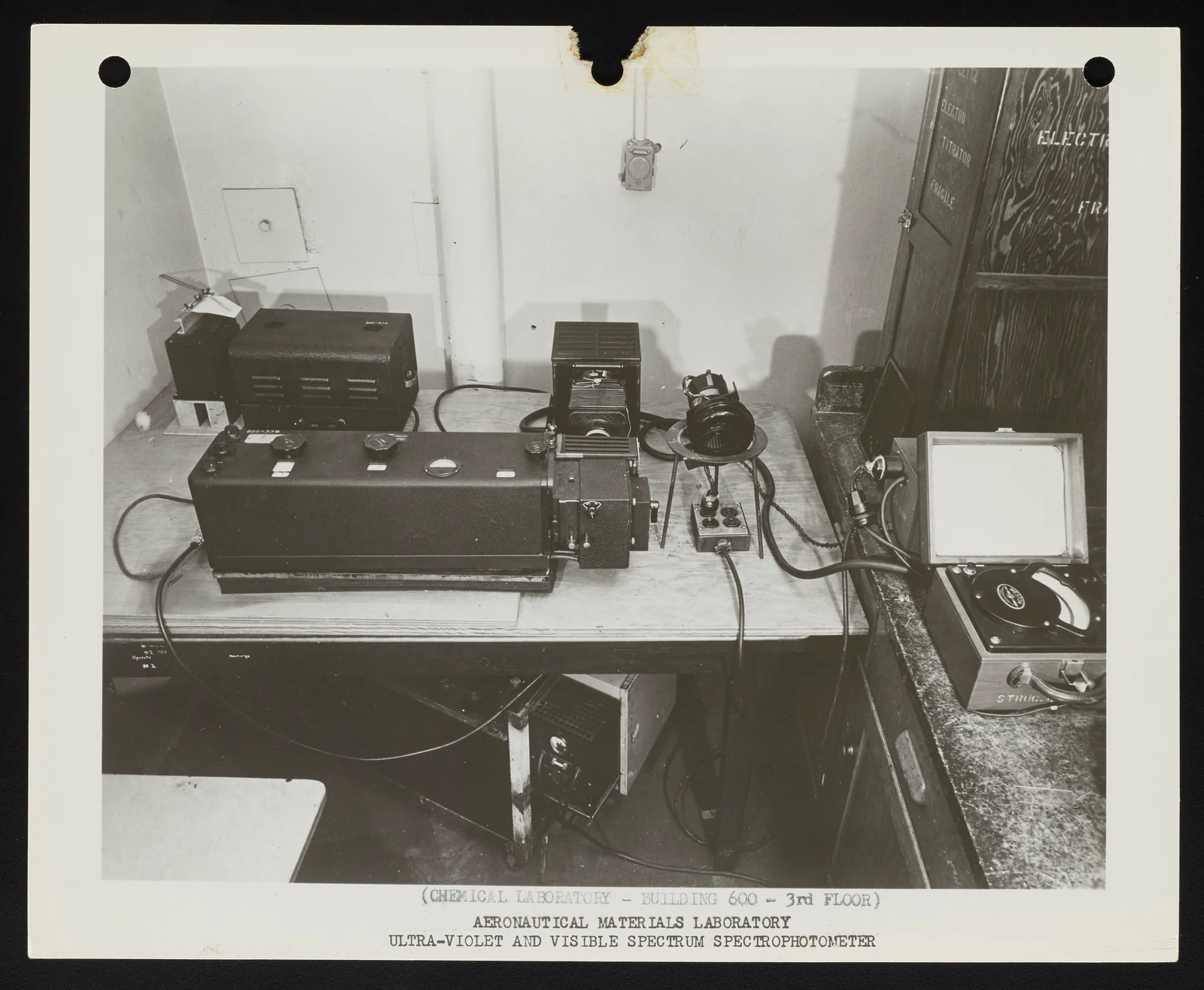
Encloses the main optical assembly on this historical instrument. The internal light source and wavelength selector are not exposed in this view.
Zoom in, then drag to inspect. Keyboard: + / − to zoom, arrows to pan, 0 to reset. Tap the numbered markers to explore parts.
UV–visible spectrophotometer — reference view
Image: Naval Air Material Center; United States. Navy · Source / original · Public domainResized and converted to WebP; original colours retained.
UV–visible spectrophotometer
UV-Vis · spectrometer
What is its use?
Measures absorbance at selected wavelengths or across a spectrum in compatible samples.
Tap a number to locate its part. Zoom, drag or use full screen to inspect the reference. Models and graduations can differ; check the actual apparatus used in your laboratory.
How to recognise it.
- Main optical instrument housing
- Controls for photometric operation
- Readout may be external on historical models or integrated in modern systems
A filter colorimeter offers selected bands; a UV–visible spectrophotometer typically permits finer wavelength selection and UV measurements when its optics and cuvette allow. The reference shows a historical laboratory assembly with an external readout; its internal optics are not visible.
Point them out.
Choose a part to bring its numbered marker into view.
The science behind the reading.
The instrument selects a wavelength band and compares transmitted light with a reference to calculate absorbance.
Think first. Then reveal.
Explain your answer aloud before opening it.
01Why may quartz cuvettes be needed?+
Quartz transmits suitable ultraviolet wavelengths; ordinary glass absorbs much of the UV region.
02What is absorbance?+
A = log10(I₀/I), where I₀ is reference intensity and I is transmitted intensity.
03What is the role of a blank?+
It establishes a baseline for the cuvette and assay matrix at the measurement wavelength.
04Can high absorbance cause error?+
Yes. Stray light and low transmitted signal can cause nonlinearity; follow the validated assay range.
Read the references.
Teaching and clinical references are listed here. Image attribution and licence appear below the viewer.