 MEDIVEERSETHE PRACTICAL HUB
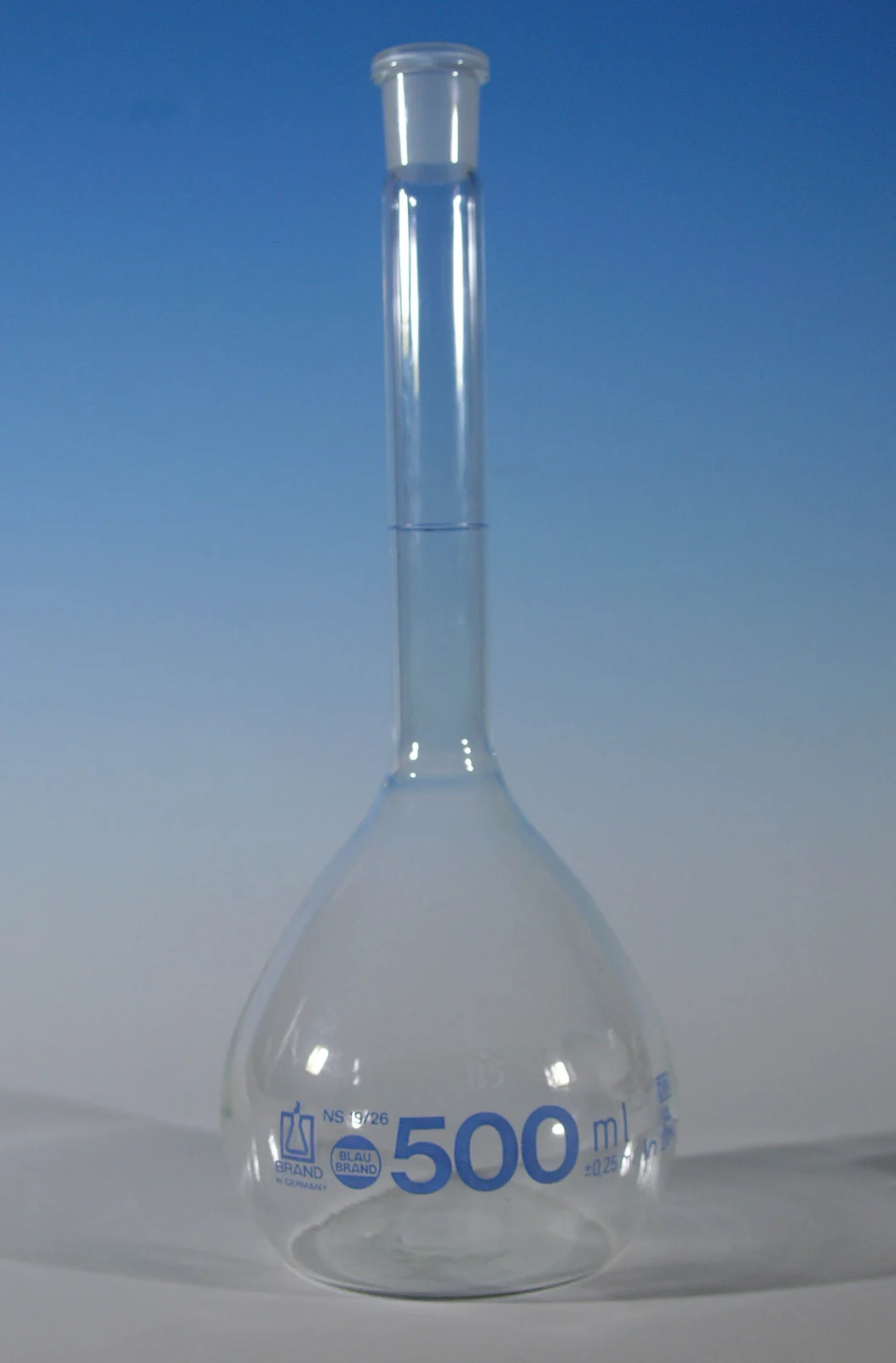
Defines the calibrated final volume when read using the correct meniscus convention.
Zoom in, then drag to inspect. Keyboard: + / − to zoom, arrows to pan, 0 to reset. Tap the numbered markers to explore parts.
Volumetric flask — reference view
Image: Hannes Grobe 19:11, 3 September 2006 (UTC) · Source / original · CC BY-SA 2.5Resized and converted to WebP; original colours retained.
Volumetric flask
Standard flask · measuring flask
What is its use?
Prepares a solution to a specified final volume.
Tap a number to locate its part. Zoom, drag or use full screen to inspect the reference. Models and graduations can differ; check the actual apparatus used in your laboratory.
How to recognise it.
- Bulbous body with a flat base
- Long narrow neck
- Single calibration line and a stopper
A conical flask is useful for mixing; it is not a substitute for accurate final-volume preparation.
Point them out.
Choose a part to bring its numbered marker into view.
The science behind the reading.
The flask is calibrated to contain the indicated volume at the stated temperature.
Think first. Then reveal.
Explain your answer aloud before opening it.
01Why dissolve before making up to the mark?+
Dissolving and mixing can change volume and temperature; the final solution must be adjusted to the calibration line.
02Why mix after making to volume?+
To obtain a homogeneous concentration throughout the flask.
03Is a volumetric flask intended for direct heating?+
No. Heating changes volume and can affect calibration or damage the flask.
04What does TC or IN indicate?+
The vessel is calibrated to contain the stated volume.
Read the references.
Teaching and clinical references are listed here. Image attribution and licence appear below the viewer.