 MEDIVEERSETHE PRACTICAL HUB
Zoom in, then drag to inspect. Keyboard: + / − to zoom, arrows to pan, 0 to reset.
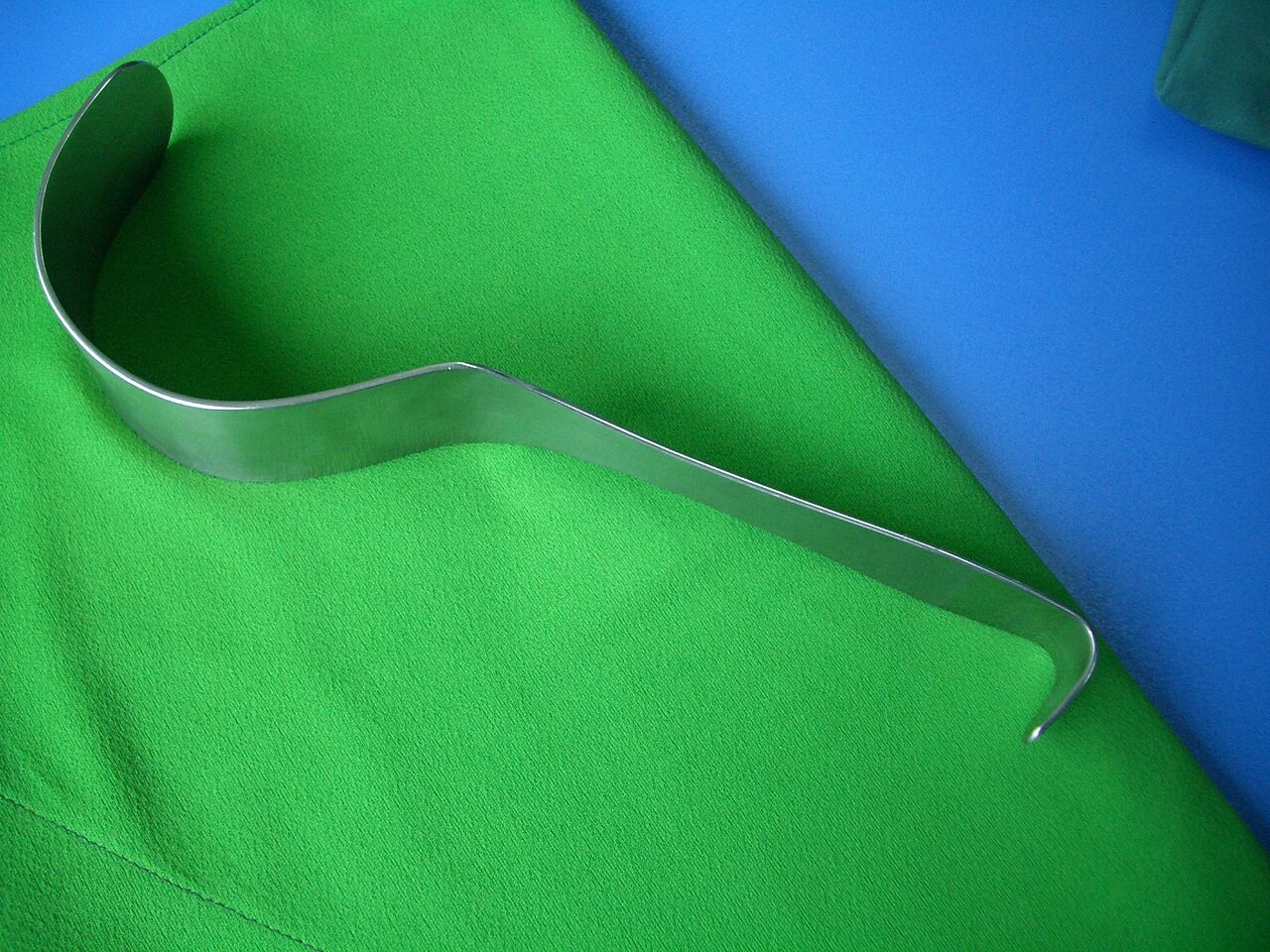
Deaver retractor: Reference view.
Image: Saltanat ebli · Source / original · CC0Resized and converted to WebP; original colours retained.
Deaver retractor
Deep abdominal retractor
What is its use?
Holds back abdominal wall or organs to expose a deeper operative field.
Explore the photo before the answer. Zoom into the jaws, inspect the locking mechanism and compare the available reference views.
How to recognise it.
- Broad thin blade with a long sweeping curve.
- Question-mark-like side profile.
- Hand-held, without a ratchet spreader.
Langenbeck has a more angular right-angle blade; Deaver has a continuous deep curve.
Name the parts.
Point to each part on your specimen as you say its name.
- Handle
- Curved body
- Broad blade
- Rounded edge
Think first. Then reveal.
Say your answer aloud before opening the suggested response.
01What does the broad blade achieve?+
It provides a wider retraction surface.
02Is it a cutting instrument?+
No. It is intended for retraction and exposure.
Read the references.
Use these clinical education and instrument references alongside your department’s practical manual. Photo attribution appears below the image.