Recognise
Identify monitoring and shock-delivery functions; follow the specific device and training.
 MEDIVEERSETHE PRACTICAL HUB
LOOK CLOSELY / UNDERSTAND CLEARLY
Recognise a defibrillator monitor and distinguish manual and automated devices.
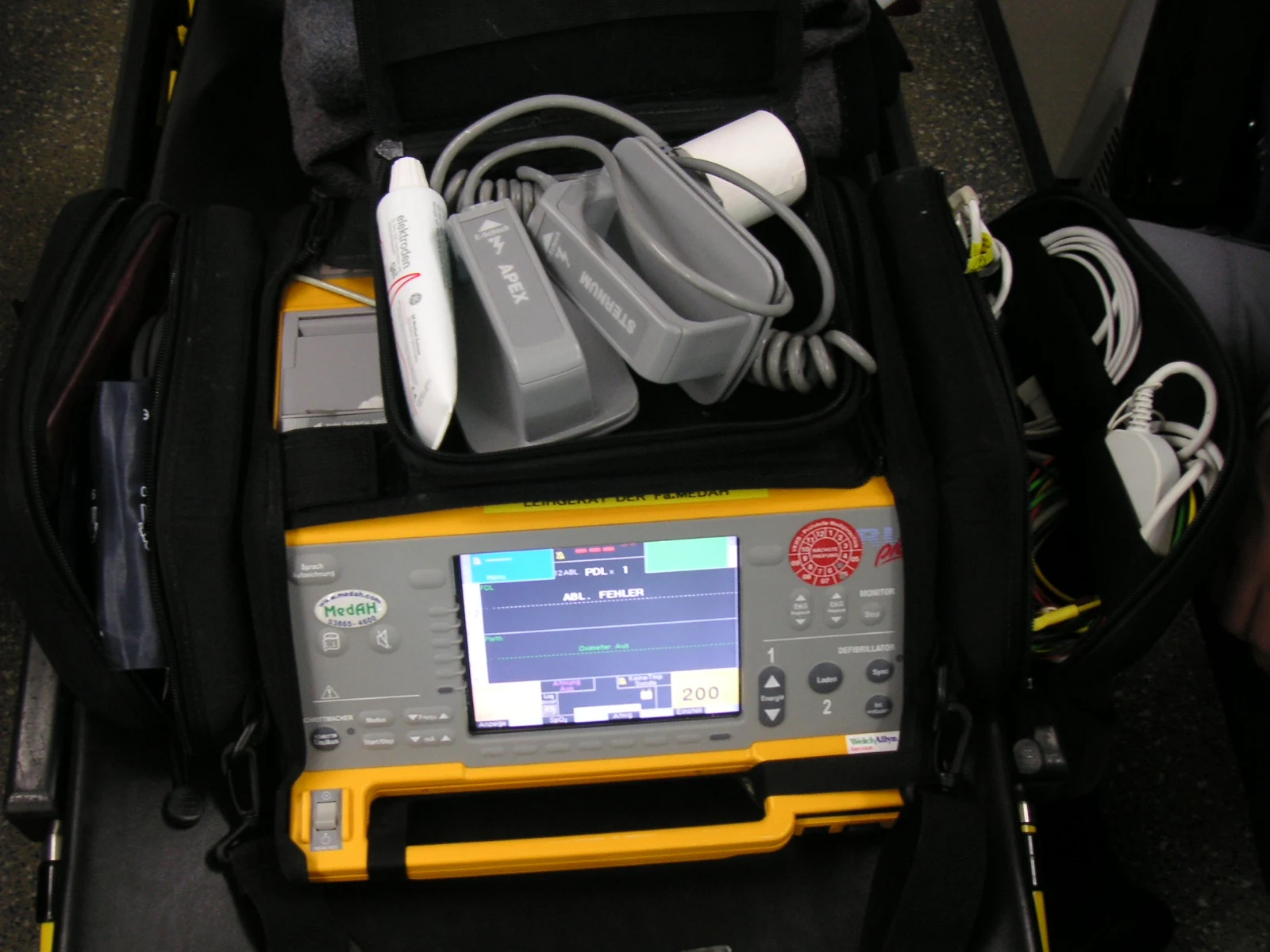
The display used for monitoring and device information.
Zoom in, then drag to inspect. Keyboard: + / − to zoom, arrows to pan, 0 to reset. Tap the numbered markers to explore parts.
defibrillator — reference view
Image: Ernstl · Source / original · CC BY-SA 2.5Resized and converted to WebP; original colours retained.
Defibrillation delivers an electrical shock when indicated for an appropriate cardiac rhythm.
Identify monitoring and shock-delivery functions; follow the specific device and training.
Manual rhythm interpretation differs from AED prompts.
Use within a trained resuscitation team and the current local protocol.
Try answering aloud, then open the suggested answer. Examiner questions vary.
No. Shock decisions depend on rhythm and the resuscitation algorithm.
No. A monitor-defibrillator may require manual operation.
No. Assess the patient within the resuscitation protocol.
No. Seek trained support and follow the appropriate emergency response.