Identify
Distinguish it from a larger head mirror or direct laryngoscope.
 MEDIVEERSETHE PRACTICAL HUB
LOOK CLOSELY / UNDERSTAND CLEARLY
Identify a mirror used in indirect laryngeal examination.
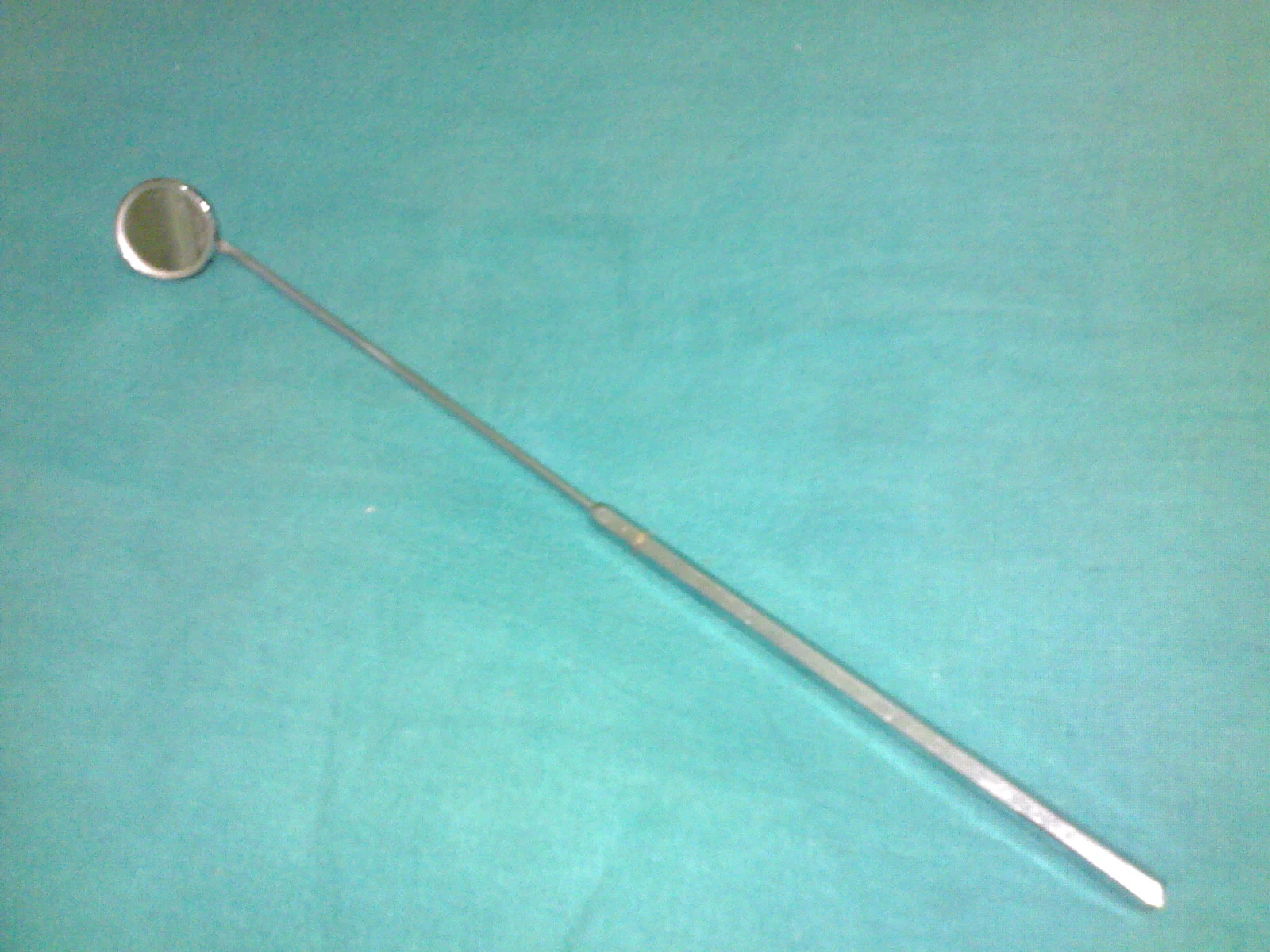
The angled reflective surface used for an indirect view.
Zoom in, then drag to inspect. Keyboard: + / − to zoom, arrows to pan, 0 to reset. Tap the numbered markers to explore parts.
laryngeal mirror — reference view
Image: Sarindam7 · Source / original · CC BY-SA 4.0Resized and converted to WebP; original colours retained.
An angled mirror reflects light and the laryngeal image to permit indirect viewing.
Distinguish it from a larger head mirror or direct laryngoscope.
Explain indirect reflected viewing.
View and tolerance vary; modern endoscopy may be required.
Try answering aloud, then open the suggested answer. Examiner questions vary.
The examiner sees a reflected image rather than a direct line of sight.
No. A direct laryngoscope is a different instrument.
No. Anatomy, gag response and clinical condition affect tolerance.
Fogging, damage and contamination can compromise examination.