Consent
Explain the reason, seek informed consent and follow chaperone policy.
 MEDIVEERSETHE PRACTICAL HUB
LOOK CLOSELY / UNDERSTAND CLEARLY
Recognise a bivalve speculum and discuss consent, privacy and appropriate examination.
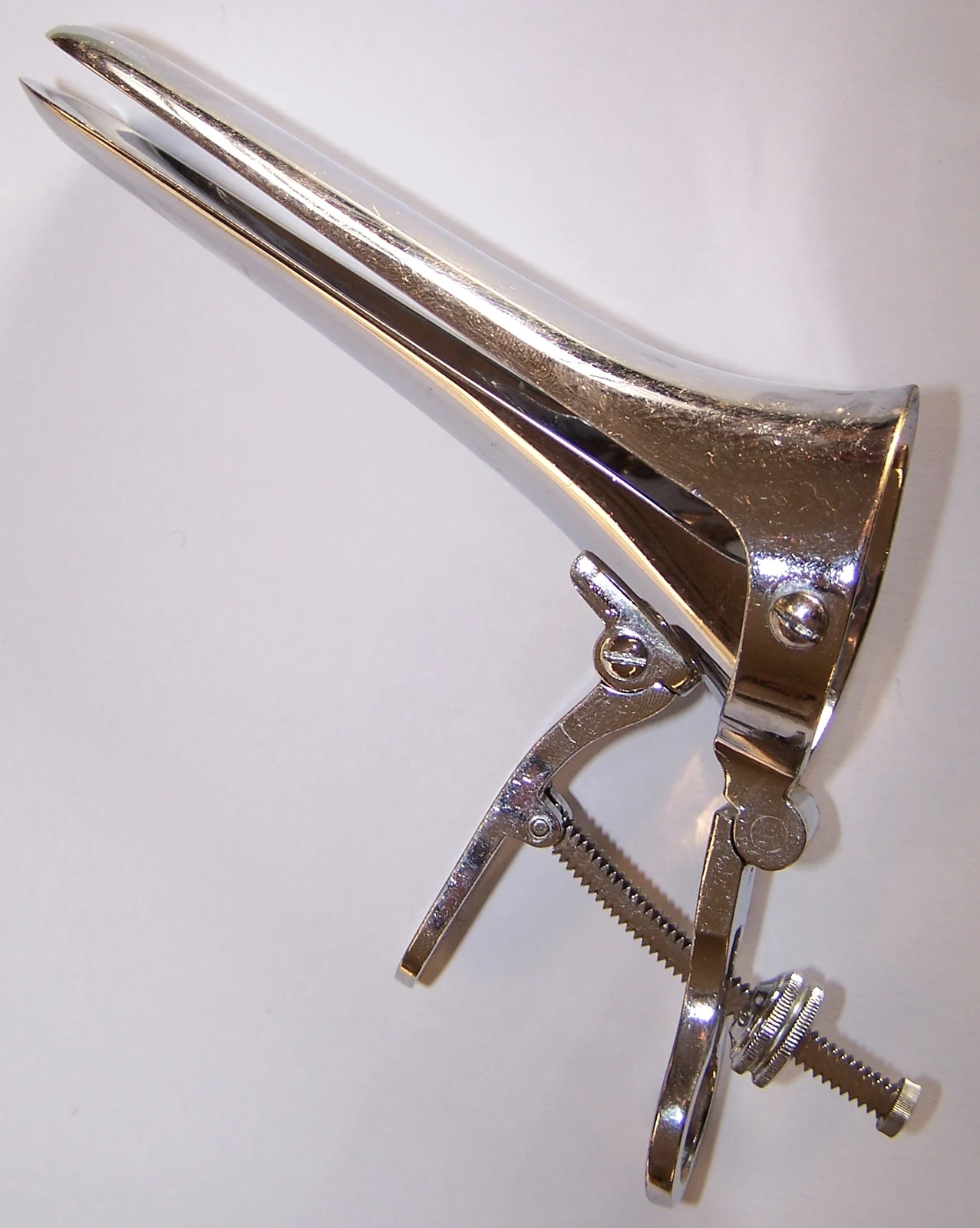
The two opposed blades in this bivalve reference.
Zoom in, then drag to inspect. Keyboard: + / − to zoom, arrows to pan, 0 to reset. Tap the numbered markers to explore parts.
bivalve speculum — reference view
Image: Author credited at source · Source / original · CC BY-SA 2.0 frResized and converted to WebP; original colours retained.
Two blades separate the vaginal walls to permit inspection when clinically indicated.
Explain the reason, seek informed consent and follow chaperone policy.
Distinguish a self-retaining bivalve design from a Sims retractor.
Size, comfort, infection prevention and stopping when requested matter.
Try answering aloud, then open the suggested answer. Examiner questions vary.
No. Explain the purpose and obtain appropriate consent.
No. Designs differ; Sims-type instruments commonly require separate support.
The vaginal walls and cervix when the examination is appropriate and the view permits.
No. Findings require clinical interpretation.