Identify the reference
Two grip surfaces or handles. Force-sensing mechanism. Analogue gauge or digital readout
 MEDIVEERSETHE PRACTICAL HUB
LOOK CLOSELY / UNDERSTAND CLEARLY
Explain standardised measurement of grip strength.
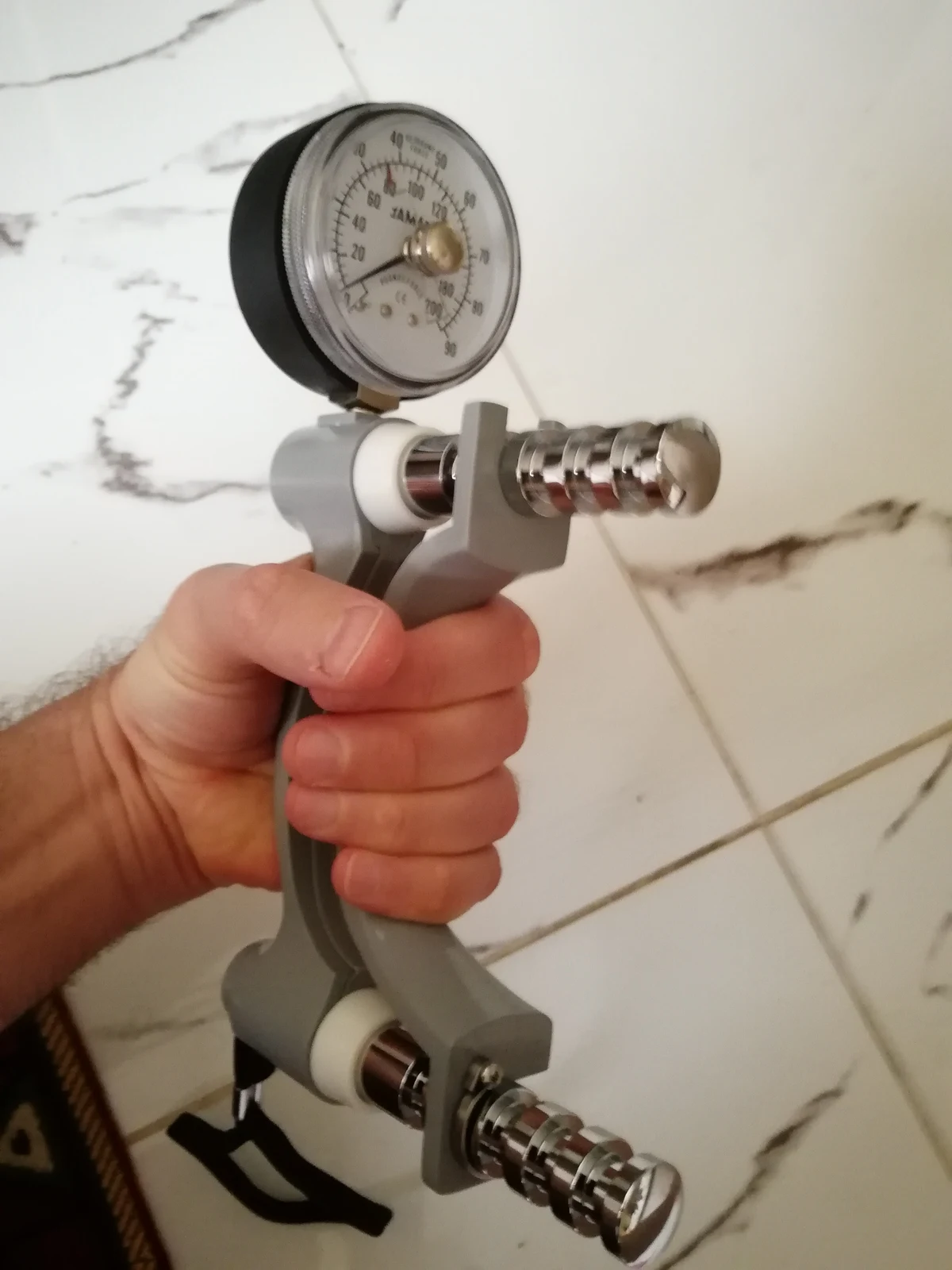
Force dial: located on the reference instrument. Compare its shape and position with the apparatus used in your practical.
Zoom in, then drag to inspect. Keyboard: + / − to zoom, arrows to pan, 0 to reset. Tap the numbered markers to explore parts.
Handgrip dynamometer — reference view
Image: Ashashyou · Source / original · CC0Resized and converted to WebP; original colours retained.
A mechanical or electronic transducer converts applied force into a calibrated reading.
Two grip surfaces or handles. Force-sensing mechanism. Analogue gauge or digital readout
A mechanical or electronic transducer converts applied force into a calibrated reading.
Record position, side, effort and relevant limitations; compare using suitable reference information.
Try answering aloud, then open the suggested answer. Examiner questions vary.
Grip force under the specified posture, handle setting and test procedure.
Joint angles and body support affect the force that can be produced.
Many devices use kilogram-force conventions; confirm the instrument’s stated units.
They help assess consistency, while allowing for effort, learning and fatigue.