Identify the reference
Clip-style finger probe in a common portable design. Digital saturation and pulse-rate readout. Light emitter and detector are built into the probe
 MEDIVEERSETHE PRACTICAL HUB
LOOK CLOSELY / UNDERSTAND CLEARLY
Recognise the device and interpret respiratory observations in clinical context.
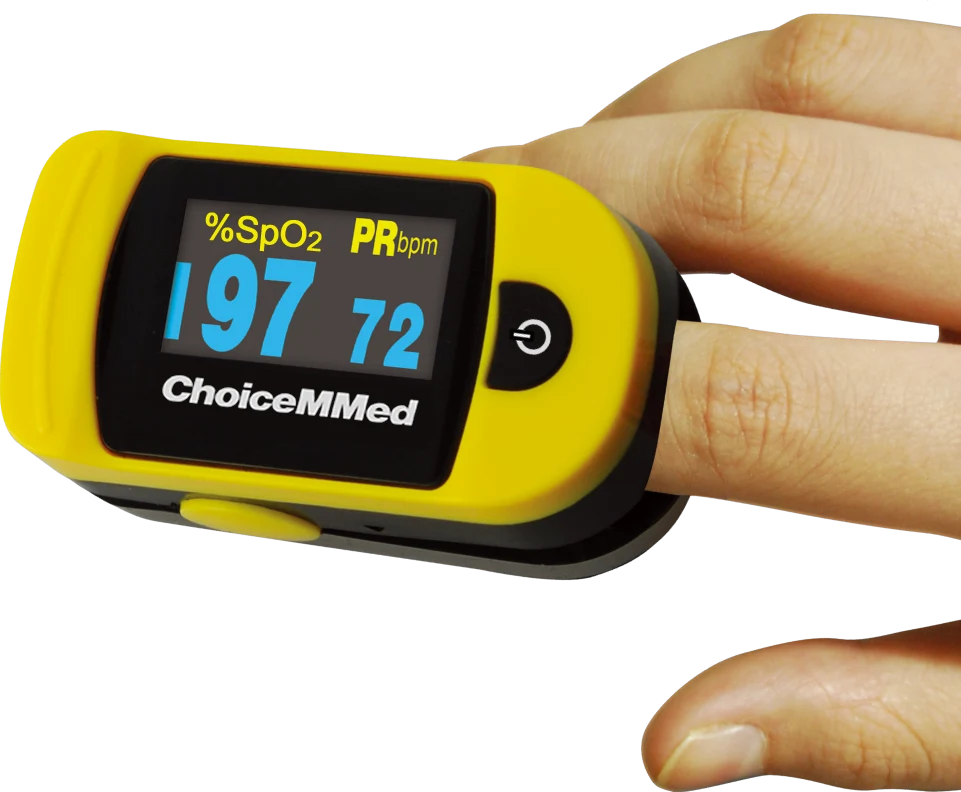
Display: located on the reference instrument. Compare its shape and position with the apparatus used in your practical.
Zoom in, then drag to inspect. Keyboard: + / − to zoom, arrows to pan, 0 to reset. Tap the numbered markers to explore parts.
Pulse oximeter — reference view
Image: Thinkpaul · Source / original · CC BY-SA 3.0Resized and converted to WebP; original colours retained.
Pulsatile light absorption at red and infrared wavelengths is analysed to estimate SpO₂.
Clip-style finger probe in a common portable design. Digital saturation and pulse-rate readout. Light emitter and detector are built into the probe
Pulsatile light absorption at red and infrared wavelengths is analysed to estimate SpO₂.
Check technique, measurement limitations and the patient’s clinical state; a single value is not a diagnosis.
Try answering aloud, then open the suggested answer. Examiner questions vary.
An estimate of peripheral arterial oxygen saturation derived by pulse oximetry.
It helps distinguish arterial pulsatile absorption from relatively static surrounding tissue absorption.
Movement, poor perfusion and other conditions can affect readings; accuracy can also vary with skin pigmentation and device performance.
No. Pulse oximetry does not directly measure carbon dioxide or ventilation.