Identify the reference
Handheld graduated device. Mouthpiece at one end. Indicator moves along a flow scale
 MEDIVEERSETHE PRACTICAL HUB
LOOK CLOSELY / UNDERSTAND CLEARLY
Recognise the device and interpret respiratory observations in clinical context.
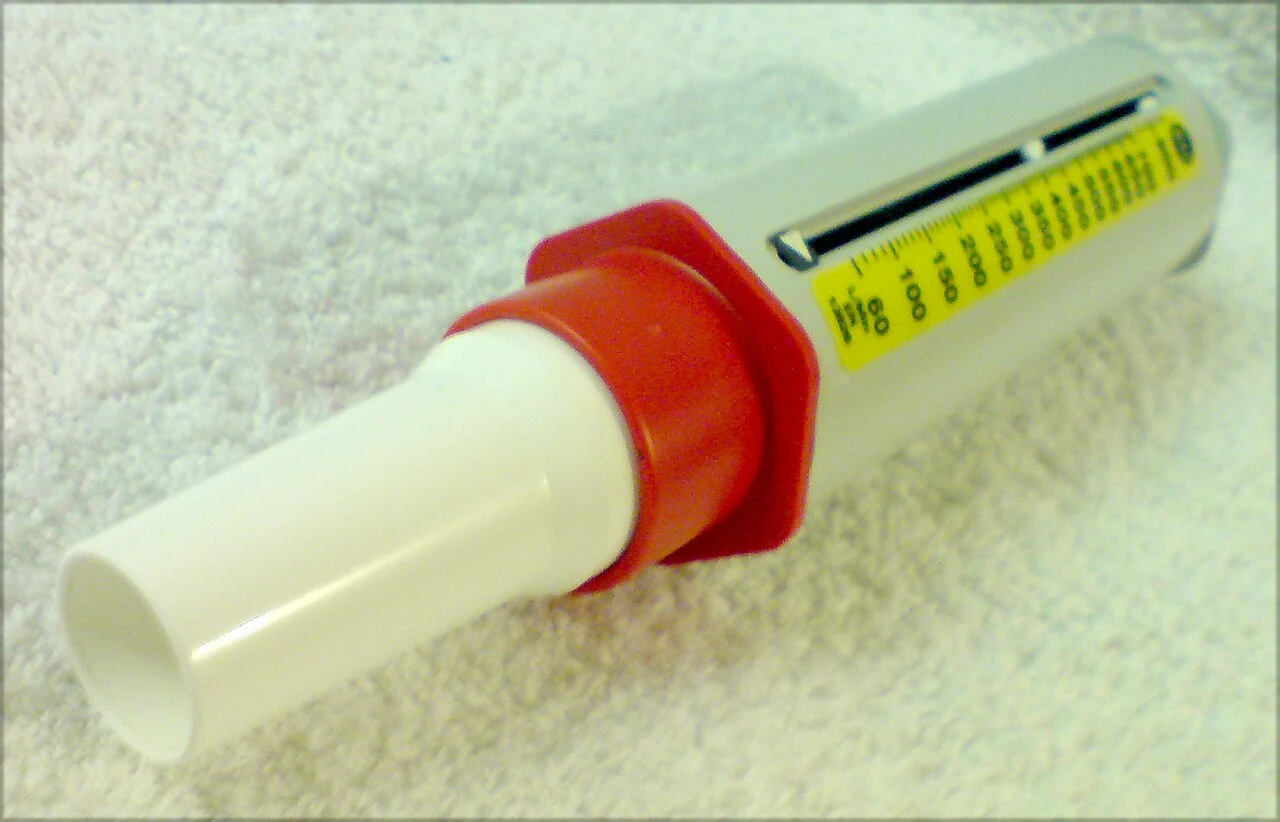
Mouthpiece: located on the reference instrument. Compare its shape and position with the apparatus used in your practical.
Zoom in, then drag to inspect. Keyboard: + / − to zoom, arrows to pan, 0 to reset. Tap the numbered markers to explore parts.
Peak expiratory flow meter — reference view
Image: No machine-readable author provided. Tomhannen assumed (based on copyright claims). · Source / original · Public domainResized and converted to WebP; original colours retained.
Expiratory flow moves a mechanical indicator or is measured electronically; the peak value is retained for reading.
Handheld graduated device. Mouthpiece at one end. Indicator moves along a flow scale
Expiratory flow moves a mechanical indicator or is measured electronically; the peak value is retained for reading.
Check technique, measurement limitations and the patient’s clinical state; a single value is not a diagnosis.
Try answering aloud, then open the suggested answer. Examiner questions vary.
The highest flow achieved during a forceful expiration from a maximal inspiration.
Litres per minute; verify the device scale.
The initial expiratory effort strongly influences the maximum flow achieved.
No. It measures a peak flow, not the gas volume left in the lungs.