Identify the reference
A chamber or sensor measures respiratory volume or flow. Modern systems usually use a mouthpiece and flow sensor. The reference shows a historical volume-measuring instrument with an outlet port
 MEDIVEERSETHE PRACTICAL HUB
LOOK CLOSELY / UNDERSTAND CLEARLY
Recognise the device and interpret respiratory observations in clinical context.
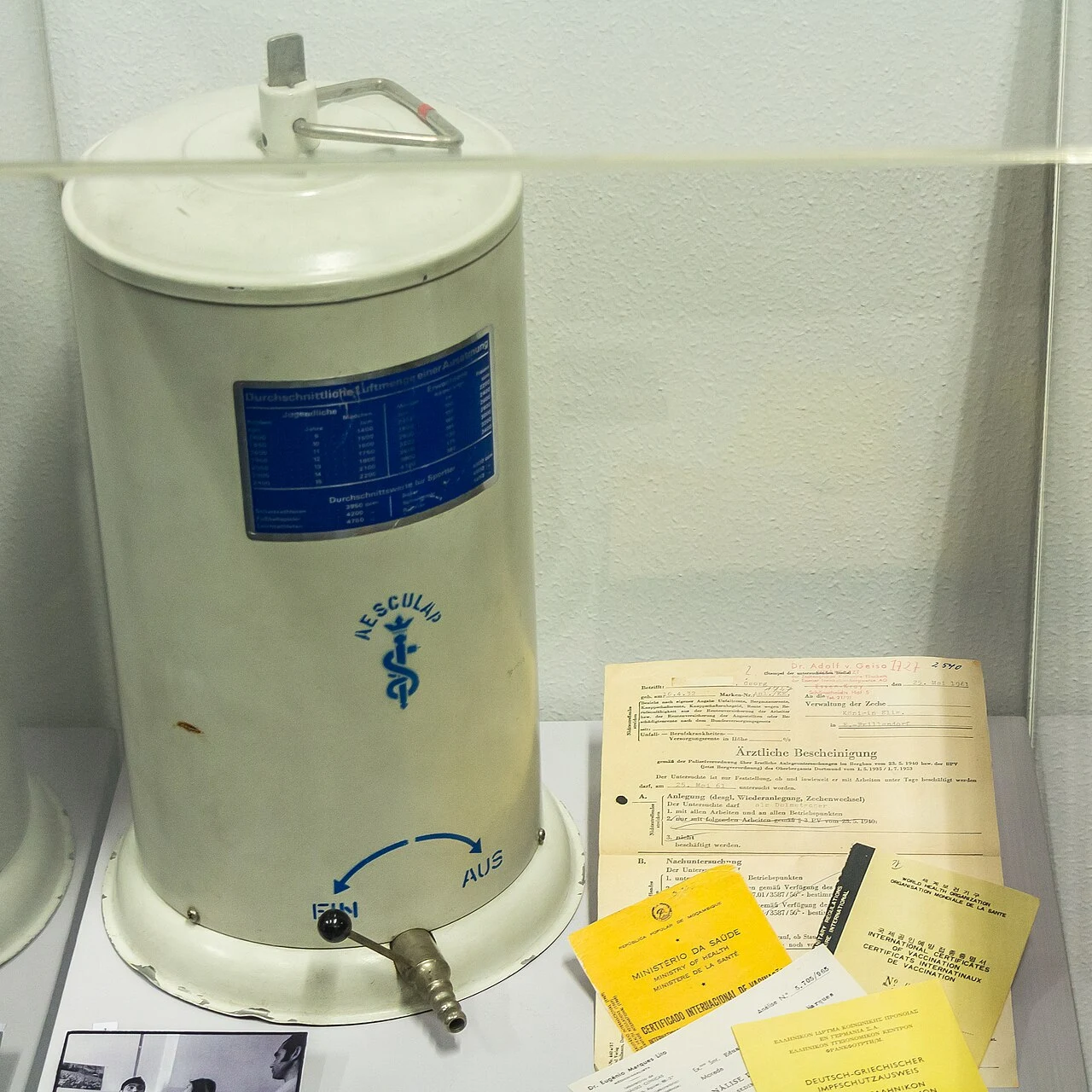
Measuring chamber: located on the reference instrument. Compare its shape and position with the apparatus used in your practical.
Zoom in, then drag to inspect. Keyboard: + / − to zoom, arrows to pan, 0 to reset. Tap the numbered markers to explore parts.
Spirometer — reference view
Image: Raimond Spekking · Source / original · CC BY-SA 4.0Resized and converted to WebP; original colours retained.
Volume is measured directly or calculated by integrating airflow over time; accurate technique and quality control are essential.
A chamber or sensor measures respiratory volume or flow. Modern systems usually use a mouthpiece and flow sensor. The reference shows a historical volume-measuring instrument with an outlet port
Volume is measured directly or calculated by integrating airflow over time; accurate technique and quality control are essential.
Check technique, measurement limitations and the patient’s clinical state; a single value is not a diagnosis.
Try answering aloud, then open the suggested answer. Examiner questions vary.
The volume expired in the first second of a forced expiratory manoeuvre.
The volume forcibly exhaled after a maximal inspiration under the specified spirometry manoeuvre.
No. Other lung-volume methods are needed.
They help assess effort, technique and reliability of the measurement.