 MEDIVEERSETHE PRACTICAL HUB
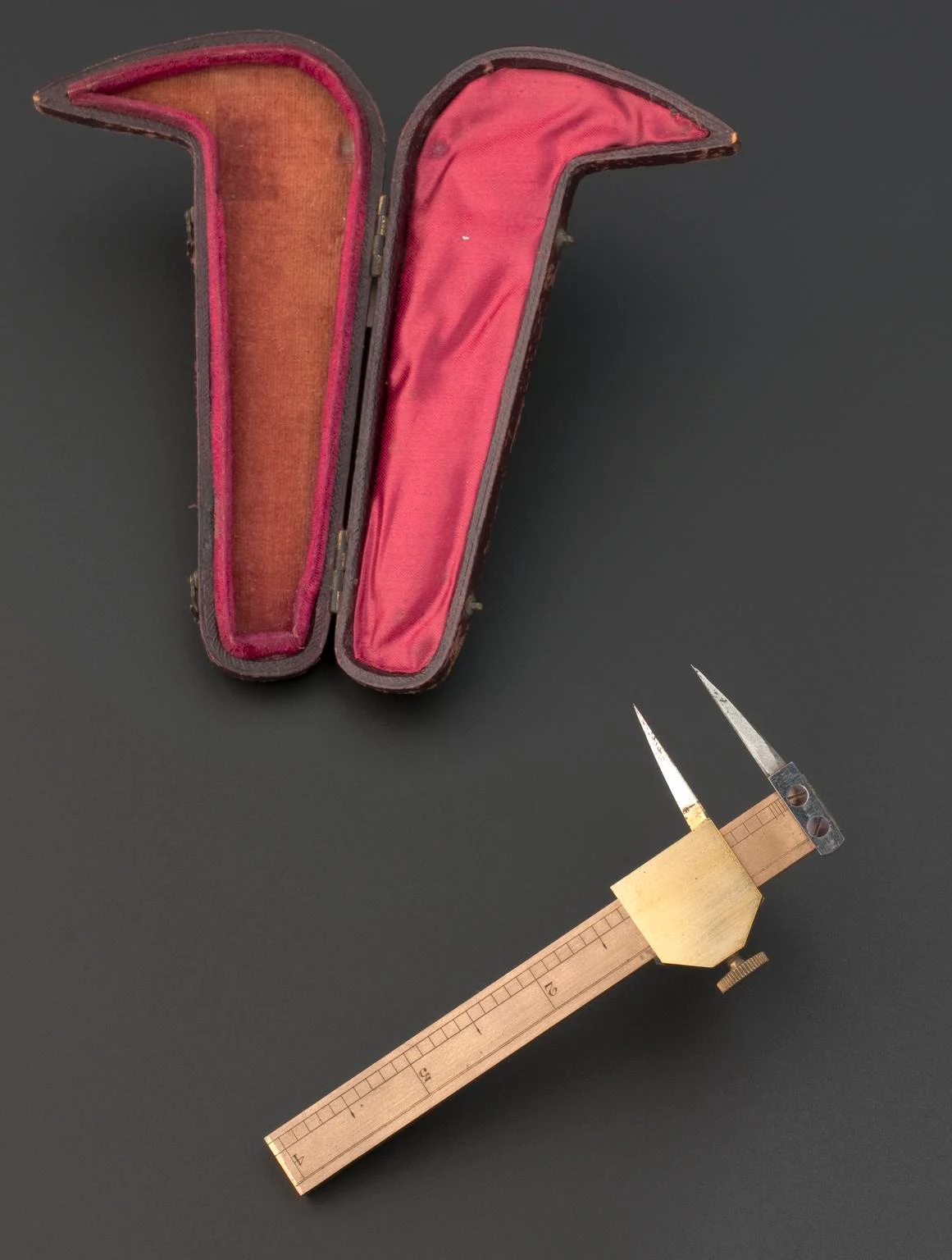
Contact tips: located on the reference instrument. Compare its shape and position with the apparatus used in your practical.
Zoom in, then drag to inspect. Keyboard: + / − to zoom, arrows to pan, 0 to reset. Tap the numbered markers to explore parts.
Aesthesiometer — reference view
Image: Science Museum Group Studio · Source / original · CC BY-SA 4.0Resized and converted to WebP; original colours retained.
Aesthesiometer
Two-point discriminator · esthesiometer
What is its use?
Assesses two-point discrimination during a sensory examination.
Tap a number to locate its part. Zoom, drag or use full screen to inspect the reference. Models and graduations can differ; check the actual apparatus used in your laboratory.
How to recognise it.
- Two separated contact points
- Adjustable distance between tips
- A scale or caliper mechanism records separation
A monofilament applies a specified buckling force; a two-point discriminator tests spatial discrimination.
Point them out.
Choose a part to bring its numbered marker into view.
The science behind the reading.
The minimum separation perceived as two distinct stimuli depends on receptor organisation, receptive fields and central processing.
Think first. Then reveal.
Explain your answer aloud before opening it.
01What is two-point threshold?+
The smallest separation at which two simultaneous contacts are reliably distinguished.
02Why is it smaller at fingertips than on the back?+
Fingertips have denser innervation and smaller receptive fields, with substantial cortical representation.
03Why should the person not watch?+
Visual information can reveal the number or placement of the contacts.
04Is the threshold the same throughout the body?+
No. It varies by site, method and individual factors.
Read the references.
Teaching and clinical references are listed here. Image attribution and licence appear below the viewer.