 MEDIVEERSETHE PRACTICAL HUB
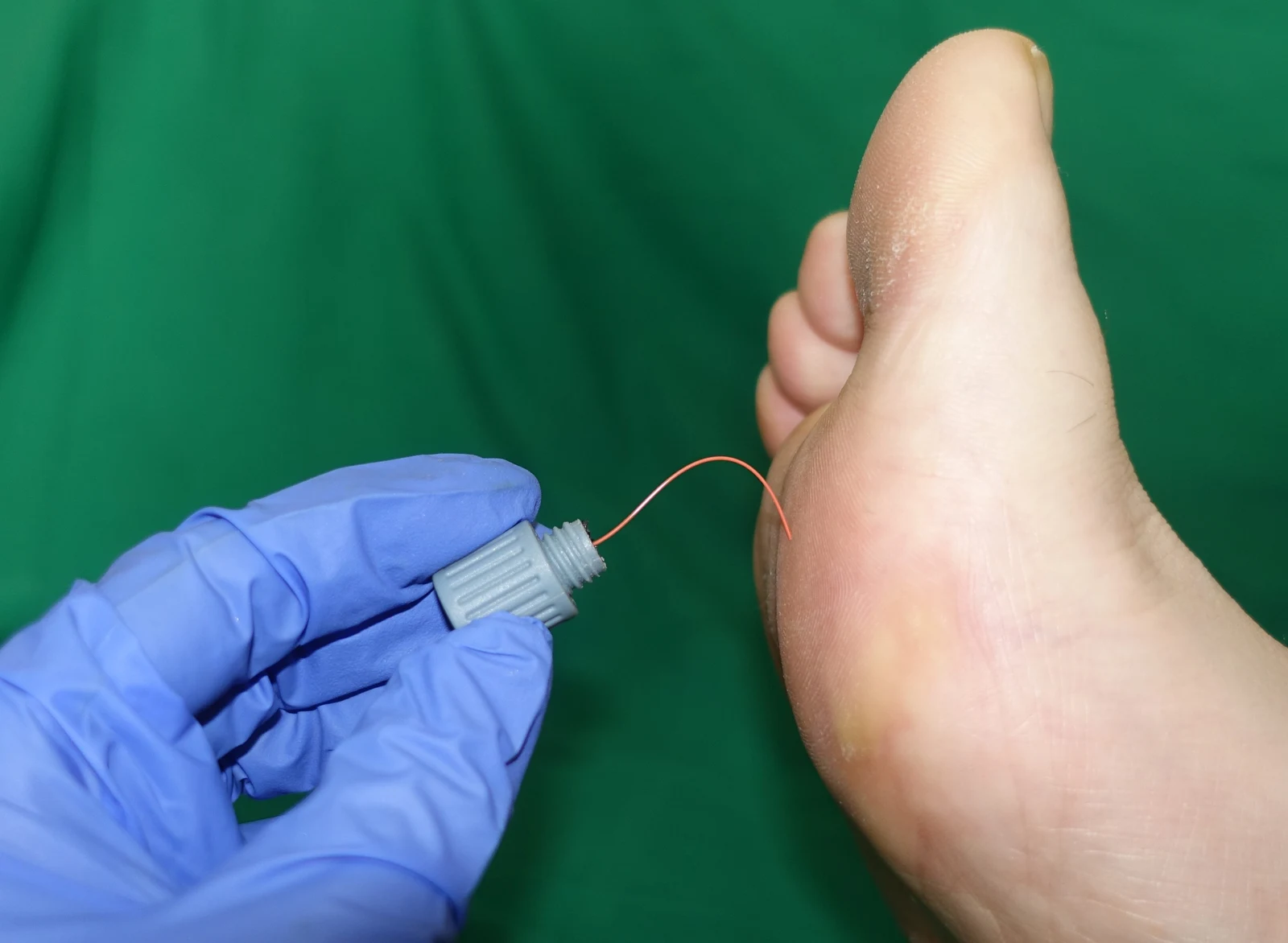
Nylon filament: located on the reference instrument. Compare its shape and position with the apparatus used in your practical.
Zoom in, then drag to inspect. Keyboard: + / − to zoom, arrows to pan, 0 to reset. Tap the numbered markers to explore parts.
Semmes–Weinstein monofilament — reference view
Image: Enter · Source / original · CC BY-SA 4.0Resized and converted to WebP; original colours retained.
Semmes–Weinstein monofilament
Protective sensation filament · 10 g monofilament
What is its use?
Tests pressure perception; a specified 10 g monofilament is commonly used in protective-sensation assessment.
Tap a number to locate its part. Zoom, drag or use full screen to inspect the reference. Models and graduations can differ; check the actual apparatus used in your laboratory.
How to recognise it.
- Nylon filament attached to a handle
- Filament bends under a specified force
- The device specification identifies its force rating
It is not a two-point discriminator or a tuning fork. Different filament ratings are not interchangeable.
Point them out.
Choose a part to bring its numbered marker into view.
The science behind the reading.
A standard filament buckles at an approximately specified force when used according to its instructions.
Think first. Then reveal.
Explain your answer aloud before opening it.
01What is the relevant property of the filament?+
Its specified buckling force, not simply its visible length or colour.
02What is commonly assessed with a 10 g filament?+
Protective pressure sensation at specified sites, within a validated examination protocol.
03Does it test vibration sense?+
No. Vibration is assessed using another tool, such as a suitable tuning fork.
04Why follow the manufacturer’s replacement guidance?+
Wear, deformation and repeated use can alter performance.
Read the references.
Teaching and clinical references are listed here. Image attribution and licence appear below the viewer.