 MEDIVEERSETHE PRACTICAL HUB
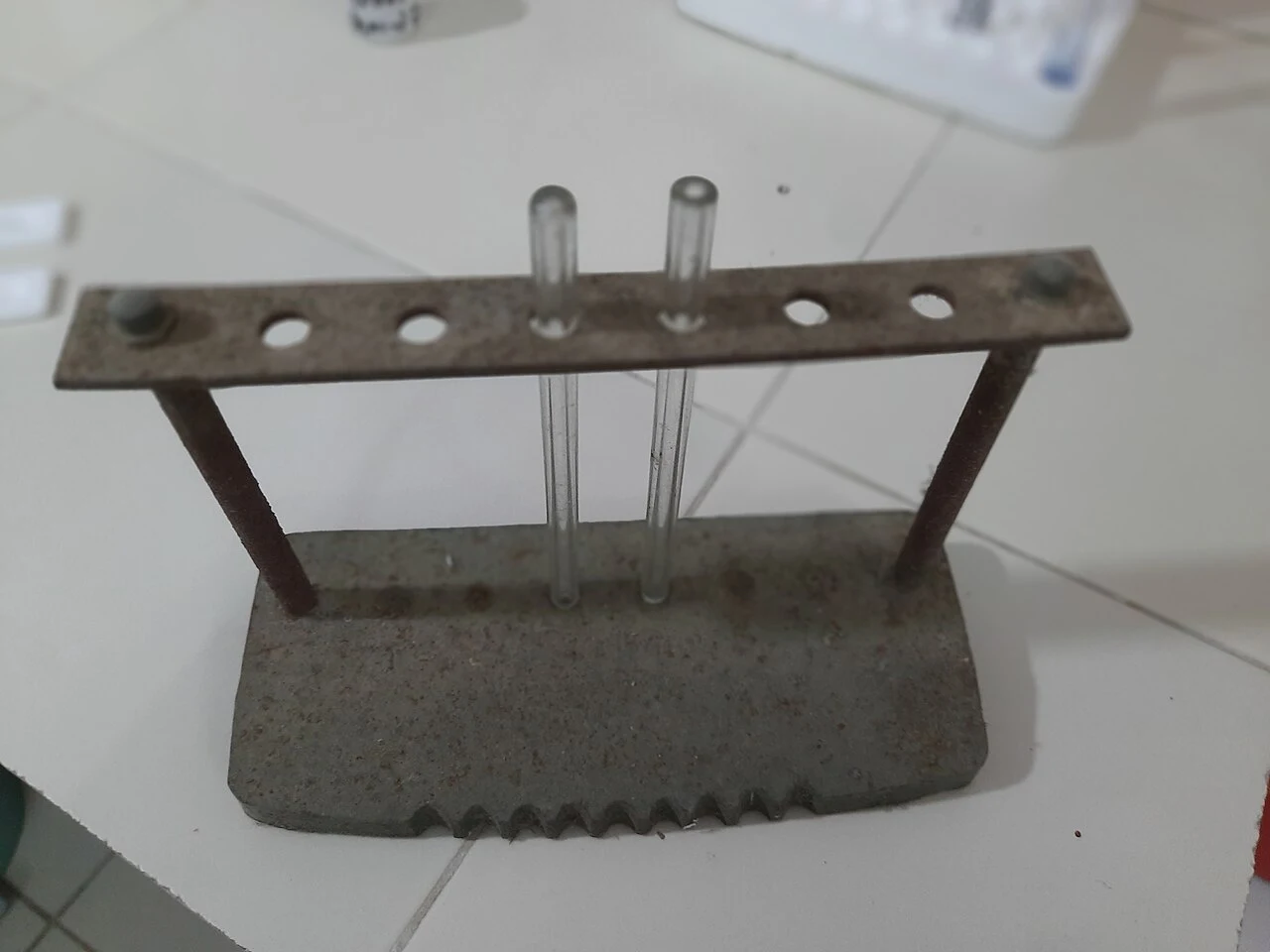
Open end: located on the reference instrument. Compare its shape and position with the apparatus used in your practical.
Zoom in, then drag to inspect. Keyboard: + / − to zoom, arrows to pan, 0 to reset. Tap the numbered markers to explore parts.
Wintrobe tube — reference view
Image: Ajay Kumar Chaurasiya · Source / original · CC BY-SA 4.0Resized and converted to WebP; original colours retained.
Wintrobe tube
Wintrobe haematocrit / ESR tube
What is its use?
Used in traditional macrohaematocrit and Wintrobe ESR methods.
Tap a number to locate its part. Zoom, drag or use full screen to inspect the reference. Models and graduations can differ; check the actual apparatus used in your laboratory.
How to recognise it.
- Short thick-walled glass tube with a rounded closed end
- Opposing graduated scales on the tube
- Typically has a 100 mm graduated column
A Westergren ESR tube has a longer standard reading column. A microhaematocrit capillary is much narrower.
Point them out.
Choose a part to bring its numbered marker into view.
The science behind the reading.
Centrifugation separates packed red cells for haematocrit; gravity sedimentation is used in the distinct ESR method.
Think first. Then reveal.
Explain your answer aloud before opening it.
01What is haematocrit?+
The fraction of the blood volume occupied by red cells, expressed as a proportion or percentage.
02What is the buffy coat?+
A thin layer of white cells and platelets above packed red cells after centrifugation.
03Why are the scales in opposite directions?+
They support different traditional readings; use the scale specified for the method.
04Can you use any centrifugation setting?+
No. Tube, rotor, time and relative centrifugal force must follow the validated method.
Read the references.
Teaching and clinical references are listed here. Image attribution and licence appear below the viewer.