Describe
Describe the visible labial crown outline and incisal edge. The root and lingual surface are not visible in this reference.
 MEDIVEERSETHE PRACTICAL HUB
OBSERVE / REASON / EXPLAIN
Recognise the visible incisor crown and describe the limits of this labial reference view.
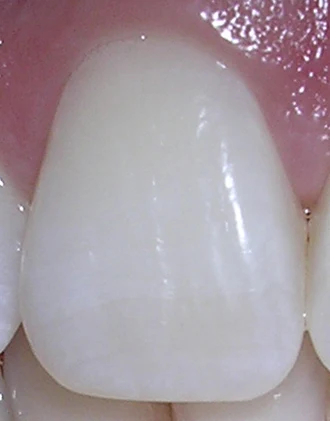
The cutting border at the lower edge of this labial reference.
Zoom in, then drag to inspect. Keyboard: + / − to zoom, arrows to pan, 0 to reset. Tap the numbered markers to explore parts.
Permanent incisor — labial crown photograph
Image: dozenist · Source / original · CC BY-SA 3.0Resized and converted to WebP; original colours retained.
Incisors have a cutting edge and a crown adapted to incision rather than a broad multi-cusp grinding surface.
Describe the visible labial crown outline and incisal edge. The root and lingual surface are not visible in this reference.
Compare labial and lingual features when the available views permit.
Do not assign side from a single ambiguous photograph.
Try answering aloud, then open the suggested answer. Examiner questions vary.
The incisal edge.
It has an incisal edge rather than a broad multi-cusp occlusal table.
On the cervical portion of the lingual surface of an anterior tooth.
No. The root is not exposed and the cingulum is on the lingual surface; additional views are needed.