 MEDIVEERSETHE PRACTICAL HUB
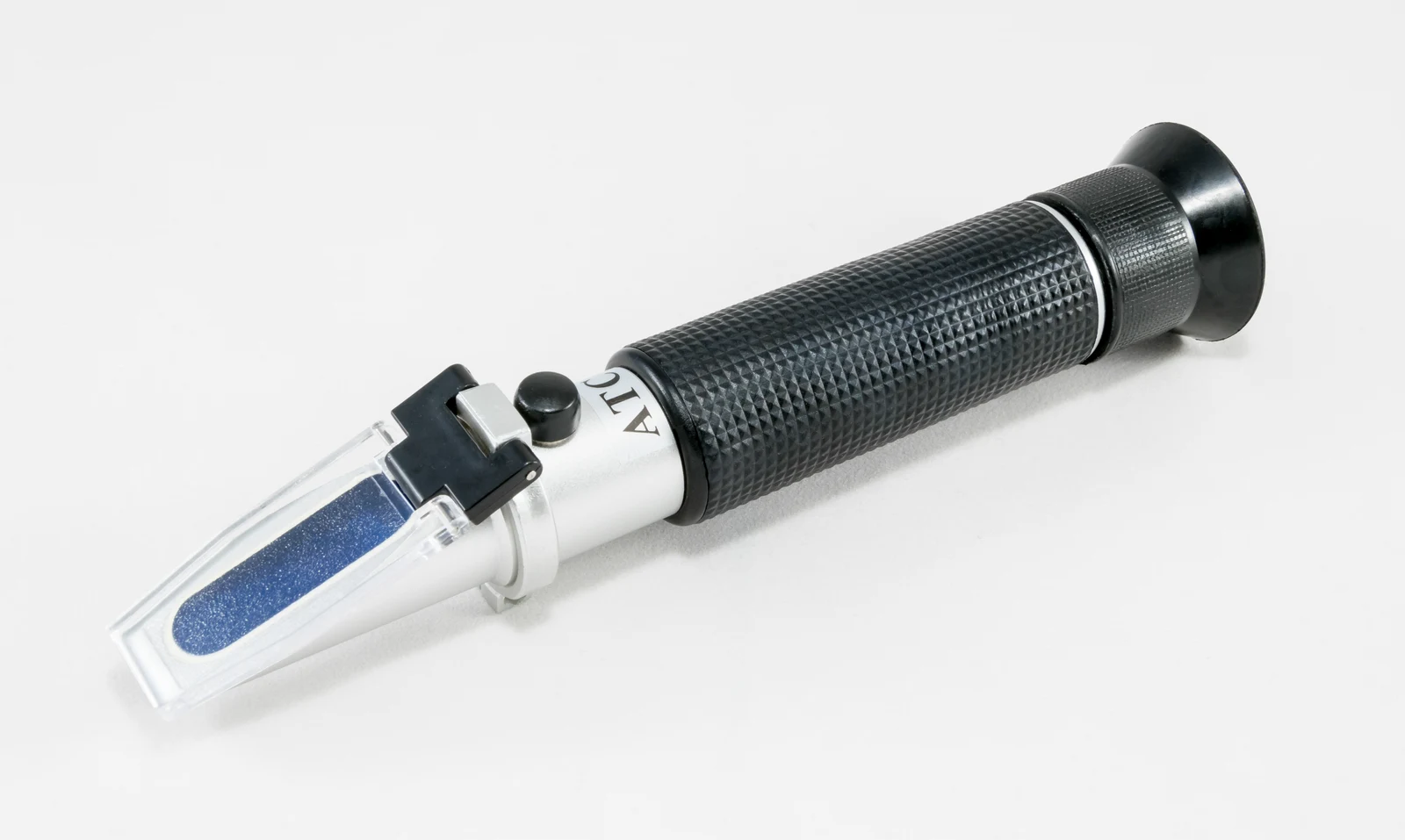
Closes over the sample prism to form the optical sample layer. The model’s scale must match the intended measurement.
Zoom in, then drag to inspect. Keyboard: + / − to zoom, arrows to pan, 0 to reset. Tap the numbered markers to explore parts.
Handheld refractometer — reference view
Image: Jacek Halicki · Source / original · CC BY-SA 4.0Resized and converted to WebP; original colours retained.
Handheld refractometer
Optical refractometer · specific gravity
What is its use?
Estimates dissolved-solute concentration or specific gravity using the appropriate calibrated scale.
Tap a number to locate its part. Zoom, drag or use full screen to inspect the reference. Models and graduations can differ; check the actual apparatus used in your laboratory.
How to recognise it.
- Prism at one end
- Cover plate over sample area
- Eyepiece and focus adjustment
A Brix scale is not a urine-specific-gravity scale. The reference model must be checked before interpreting a reading.
Point them out.
Choose a part to bring its numbered marker into view.
The science behind the reading.
Refraction depends on optical properties of the sample; the instrument converts refractive index to a specified scale.
Think first. Then reveal.
Explain your answer aloud before opening it.
01What does it measure directly?+
An optical response related to refractive index, which is converted to a scale by calibration.
02Why check the scale?+
Brix, salinity and clinical specific-gravity scales are not interchangeable.
03Why calibrate as directed?+
A known reference establishes a reliable baseline for that model.
04Can all solutes affect the result equally?+
No. Interferences and the sample’s composition can affect the relation between refractive index and the reported value.
Read the references.
Teaching and clinical references are listed here. Image attribution and licence appear below the viewer.