 MEDIVEERSETHE PRACTICAL HUB
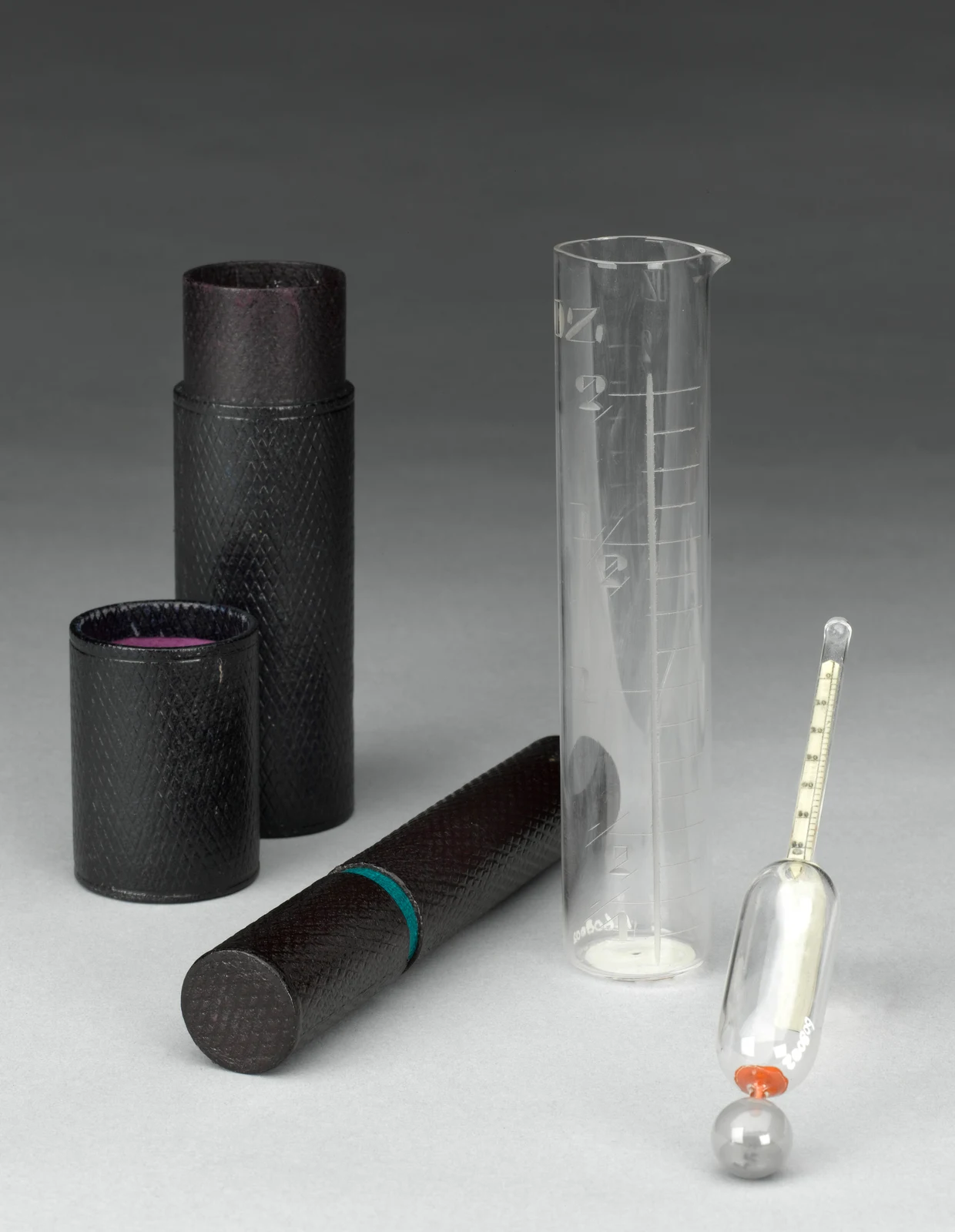
Carries the specific-gravity scale; read according to the instrument’s meniscus and calibration instructions.
Zoom in, then drag to inspect. Keyboard: + / − to zoom, arrows to pan, 0 to reset. Tap the numbered markers to explore parts.
Urinometer with measuring cylinder — historical hydrometer reference
Image: https://wellcomeimages.org/indexplus/obf_images/e8/b8/a7399252090e0e77515638102dfe.jpg Gallery: https://wellcomeimages.org/indexplus/image/L0058014.html Wellcome Collection gallery (2018-04-06): https://wellcomecollection.org/works/t8maf9uh CC-BY-4.0 · Source / original · CC BY 4.0Resized and converted to WebP; original colours retained.
Urinometer
Urine hydrometer · specific gravity meter
What is its use?
Estimates urine specific gravity by flotation in a suitable specimen volume.
Tap a number to locate its part. Zoom, drag or use full screen to inspect the reference. Models and graduations can differ; check the actual apparatus used in your laboratory.
How to recognise it.
- Floating glass hydrometer
- Weighted lower bulb
- Graduated narrow stem
A refractometer estimates specific gravity from optical properties; a urinometer measures buoyancy.
Point them out.
Choose a part to bring its numbered marker into view.
The science behind the reading.
At equilibrium, the displaced liquid supports the hydrometer’s weight; floating depth depends on liquid density.
Think first. Then reveal.
Explain your answer aloud before opening it.
01What is specific gravity?+
The ratio of a sample’s density to a reference water density under defined conditions; it is dimensionless.
02Why must the float not touch the container?+
Contact interferes with free flotation and distorts the reading.
03Why check temperature?+
Density and the instrument calibration depend on temperature.
04Does one reading establish a diagnosis?+
No. Interpret with the specimen, method, clinical context and other results.
Read the references.
Teaching and clinical references are listed here. Image attribution and licence appear below the viewer.